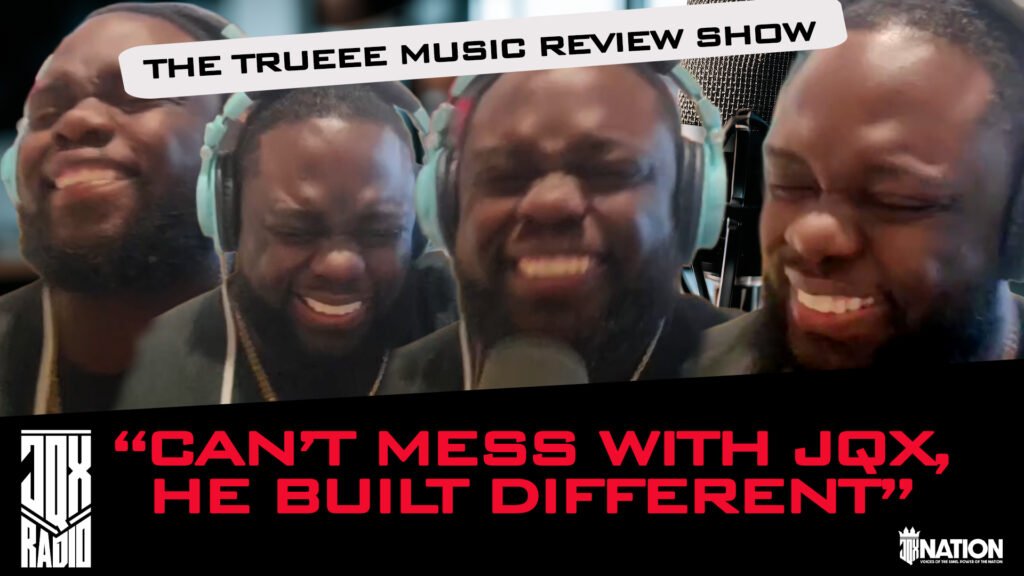

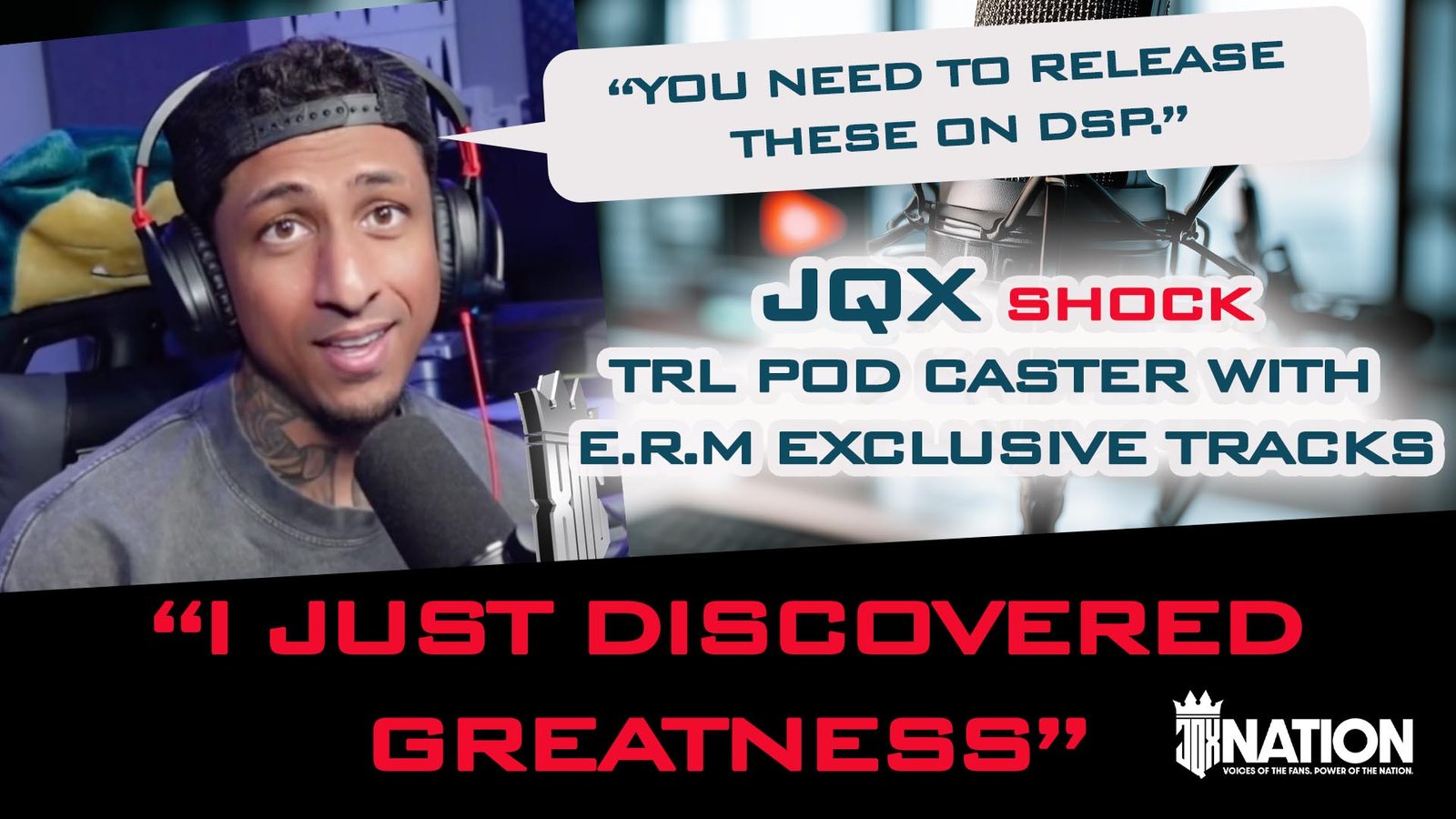
The legend of JQX continues to grow — and this time, the reaction came from an unexpected place.
During a recent live music review session hosted by a TRL music podcaster, listeners witnessed something familiar to anyone who has followed the rise of JQX: pure disbelief, excitement, and genuine amazement at the sound.
But alongside the praise came one major frustration.
None of the tracks were available on digital streaming platforms.
And the internet had thoughts.
The submitted records fell under the growing JQX genre known as ERM — Electronic Rhythm Music — a sonic universe that blends cinematic textures, electronic energy, rhythm-driven structure, and emotional storytelling into a sound that many reviewers struggle to categorize.
According to the podcaster, the tracks didn’t feel like typical submissions.
They felt like an experience.
Listeners described:
For a reviewer accustomed to hearing hundreds of songs weekly, the reaction was clear: these weren’t ordinary records.
As excitement built during the review, the host attempted to search for the tracks on popular streaming platforms — only to discover they weren’t publicly available.
The mood shifted instantly.
What started as admiration turned into confusion.
How could music that sounds this polished… this ready… not be accessible?
The absence sparked debate among viewers:
For longtime followers of JQX, the answer may be obvious.
In an era where millions of tracks flood digital platforms daily, availability is often assumed to be the default.
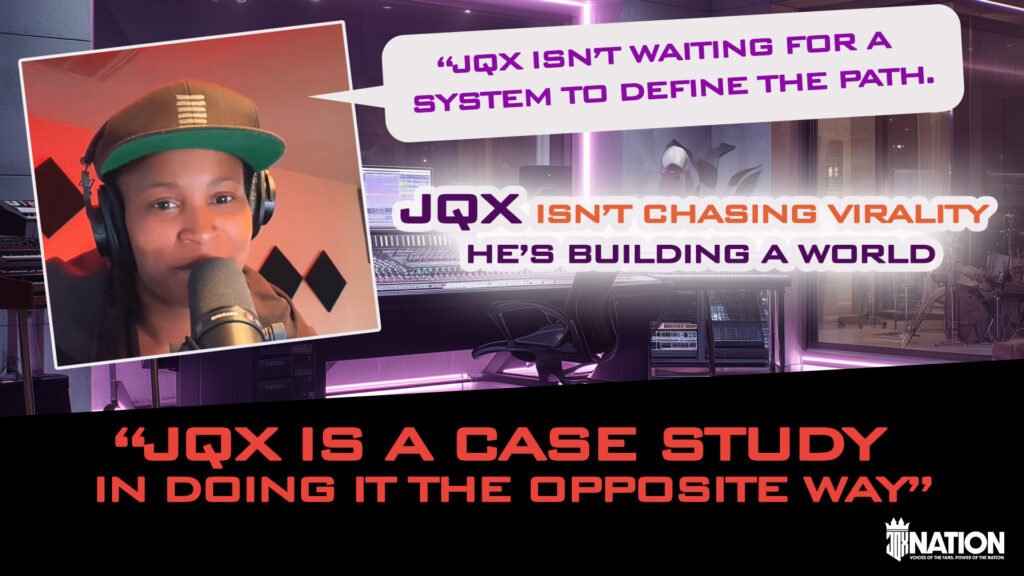
But JQX has consistently operated outside traditional industry expectations.
Rather than chasing streaming algorithms, the movement has built momentum through:
By limiting access, JQX transforms each listening moment into an event rather than background noise.
And ironically, the lack of streaming availability may be amplifying demand even further.
Fans within JQXNATION understand that ERM isn’t just a sound; it’s a philosophy.
Electronic Rhythm Music focuses on:
Reviewers often describe entering a “world” rather than simply hearing a song — a concept that aligns with the broader JQX vision of building experiences that extend beyond traditional listening.
The TRL review highlights something deeper happening within music culture.
JQX isn’t just releasing tracks — it’s creating anticipation.
And anticipation is powerful.
As more reviewers react with shock, curiosity, and excitement, the movement continues to grow without relying on conventional promotion or industry playbooks.
The question now isn’t whether listeners want access.
The question is:
When — and how — will JQX decide to open the gates?
Until then, one thing is certain.