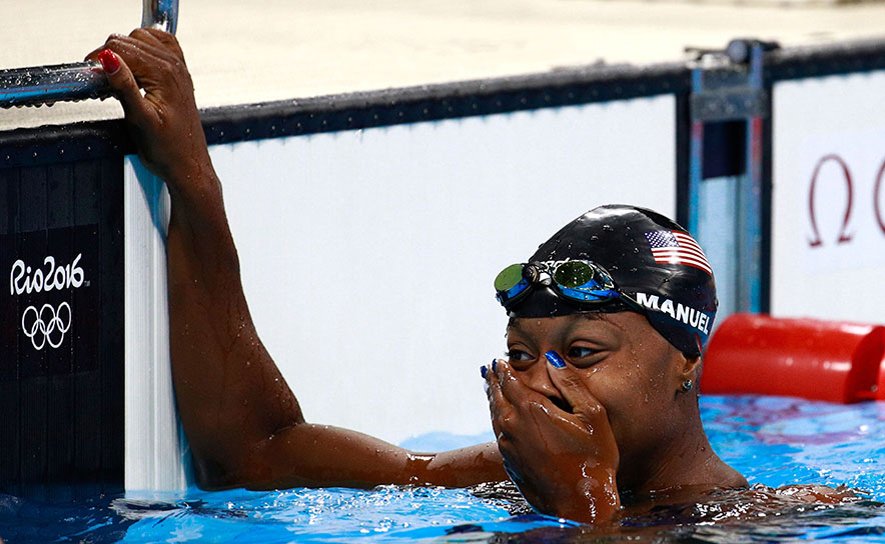


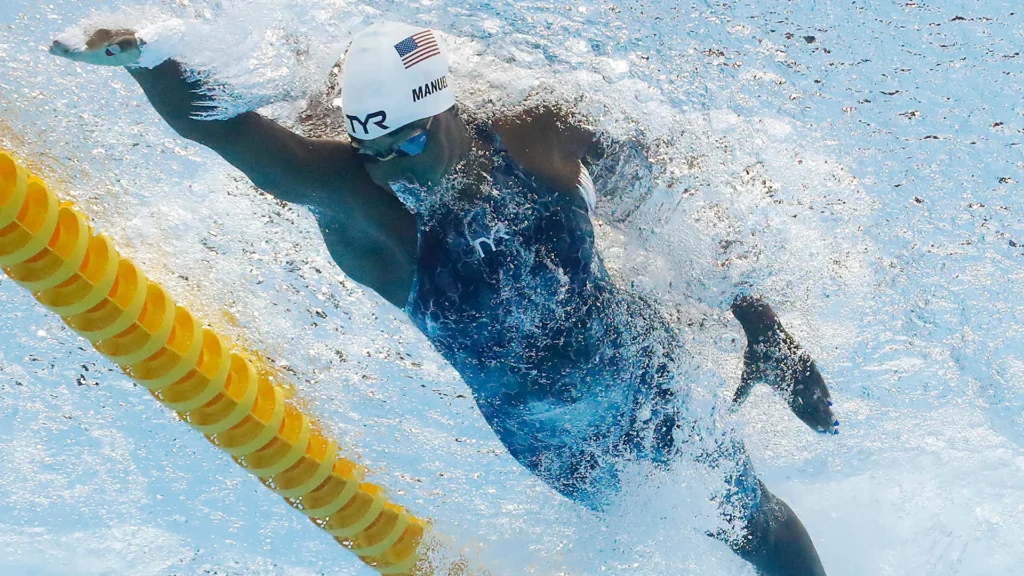
She touched the wall, lifted her head, and glanced at the scoreboard.
In that instant, history shifted.
For the first time in more than a century of Olympic swimming, a Black American woman stood on the top step of the podium.
Simone Manuel didn’t just win a race — she changed what the sport looked like.
In the 100-meter freestyle at the 2016 Rio Olympics, Manuel powered through the water and claimed gold, becoming the first Black American woman ever to win an individual Olympic swimming title. The moment was electric, but the journey to it was anything but easy.
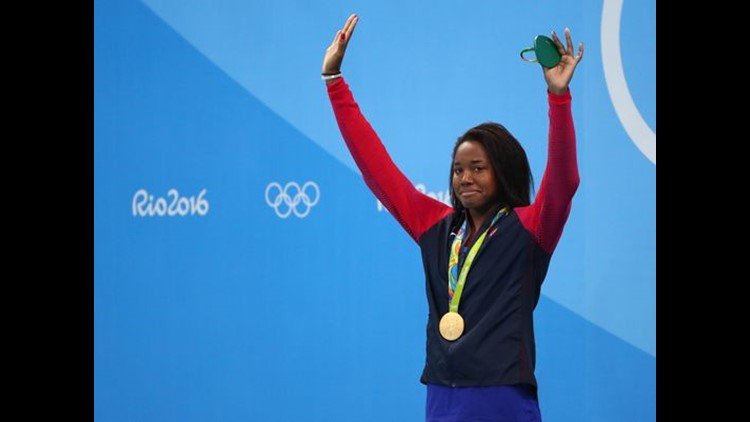
Swimming has long been a sport where Black athletes were underrepresented, overlooked, and often told—directly or indirectly—that they didn’t belong. For generations, the pool symbolized barriers as much as opportunity. Simone Manuel entered that space carrying not just her own ambition, but the quiet weight of history.
Every early morning practice.
Every moment of doubt.
Every time she stood out simply by showing up.
That race in Rio was more than a test of speed. Every stroke pushed against an old story — one that claimed certain lanes weren’t meant for certain bodies, that excellence had a narrow definition, and that some doors didn’t need to be opened because they were never meant to be entered.
Manuel proved otherwise.
In doing so, she reminded the world of a powerful truth: talent has no color, and greatness doesn’t wait for permission. Representation isn’t just about visibility — it reshapes belief. It changes what feels possible for those who come next.
That gold medal was not hers alone.
It belonged to every young girl who never saw herself reflected in the water.
To every athlete who loved a sport that didn’t always love them back.
To every dream delayed by the absence of example.
History changes the moment someone refuses to stay invisible.
Some victories echo far beyond the finish line — and Simone Manuel’s still ripples through the water today.